

Purchasing a home is one of the most significant financial decisions you will ever make. It is an exciting journey but can be fraught with pitfalls to derail your plans or lead to costly mistakes. Whether you are a first time homebuyer or looking to purchase your next property, understanding the common errors that trip up buyers can save you thousands of dollars and months of frustration.
- Current Housing Market Conditions in 2026
- Mistake #1: Not Getting Pre-Approved for a Mortgage
- Why This Mistake is So Costly
- The Difference Between Pre-Qualification and Pre-Approval
- How to Get Pre-Approved
- Mistake #2: Underestimating the True Cost of Homeownership
- Beyond the Monthly Mortgage Payment
- A Real World Example
- Rising Insurance and Tax Costs
- How to Avoid This Mistake
- Mistake #3: Skipping the Home Inspection
- Why Inspections Are Non-Negotiable
- The Dangers of Waiving Inspections
- What Inspections Should Include
- How to Use Inspection Results
- Mistake #4: Making Emotional Decisions
- Mistake #5: Maxing Out Your Mortgage Approval
- Why Lenders Approve More Than You Should Borrow
- The Risks of Buying Too Much House
- Setting a Realistic Budget
- Mistake #6: Not Shopping Around for Mortgage Rates
- Mistake #7: Failing to Research the Neighborhood
- Mistake #8: Trying to Time the Market Perfectly
- Mistake #9: Purchasing a Home with No Down Payment
- Mistake #10: Co-Signing with Family or Friends
- Mistake #11: Making Major Financial Changes Before Closing
- Mistake #12: Ignoring the Closing Disclosure
- Mistake #13: Overpaying Based on Outdated Comparables
- Mistake #14: Skipping the Real Estate Agent
- Understanding the 2026 Housing Market Outlook
- Expert Tips for Success in 2026
- Building Your Home Buying Action Plan
- Your Path to Successful Homeownership
U.S. homebuyers will start to get some relief in 2026, with affordability improving as income growth outpaces home price growth. Next year will mark the beginning of a long, slow recovery for the housing market. The Great Housing Reset will take shape in 2026.
For many first time buyers, the path to homeownership feels like navigating a system full of hidden rules, unwritten expectations, and financial traps. “I work with first-time buyers, working families, and communities that were never taught the ‘rules of the game.’ Most mistakes aren’t about intelligence. They’re about access, timing, and bad advice passed down like folklore,” according to Jeremy Davis, president of mortgage at Southern Bancorp.
This comprehensive guide will walk you through the most common home buying mistakes in 2026 and provide actionable strategies to help you navigate the process successfully while protecting your financial future.
Current Housing Market Conditions in 2026
Mortgage Rate Environment
Understanding the current interest rate landscape is essential for making informed decisions. The average mortgage interest rate on a 30-year term is 5.99% as of February 4, 2026, according to Zillow. The average mortgage interest rate on a 15-year term moved up to 5.50% from the 5.37% it had been consistently sitting at for multiple weeks.
The 30-year fixed-rate mortgage averaged 6.10% as of January 29, 2026, up slightly from last week when it averaged 6.09%. A year ago at this time, the 30-year FRM averaged 6.95%.
This represents a significant improvement from where rates stood in early 2025. Just one year later, the mortgage interest rate climate looks noticeably different. And it could improve further in 2026. Mortgage interest rates declined gradually for much of 2025, inspired in part by consistent interest rate cutting by the Federal Reserve in the final months of the year.
Housing Price Trends
Redfin expects the median U.S. home-sale price to rise 1% year over year in 2026. Prices will tick up only marginally because still-high mortgage rates and prices, along with a weaker economy, will curb demand. Homebuying will become more affordable because home prices will grow slower than wages for a sustained period for the first time since the aftermath of the financial crisis.
J.P. Morgan analysts believe this could be enough, along with a rising wealth effect, to shift demand higher while supply increases subside. “Consequently, we expect home prices to stall at 0% nationally in 2026.”
Market Inventory and Buyer Conditions
Existing home sales are projected to increase less than 2% to 4.13 million properties in 2026, according to Realtor.com’s report. That is only a slight bump from this year’s projected 4.07 million home sales, but a notable change given that transactions have been relatively flat throughout 2025.
“We are seeing a little better condition for more home sales … with more inventory and the lock-in effect steadily disappearing—because life-changing events are making more people list their property to move on to their next home.”
Mistake #1: Not Getting Pre-Approved for a Mortgage

Why This Mistake is So Costly
One of the biggest mistakes homebuyers make is failing to secure mortgage pre-approval before starting their home search. Without pre-approval, you may not have a clear understanding of your budget, and sellers might view you as less serious than other buyers.
According to mortgage experts, failing to secure a pre-approval before shopping is one of the most costly missteps. “This is the fastest way to lose leverage before the game even starts.”
This is the number one mistake, especially among first-time buyers! If you do not take the time to get pre-approved for your mortgage, you risk visiting properties that are above your budget.
The Difference Between Pre-Qualification and Pre-Approval
Many buyers confuse pre-qualification with pre-approval. Pre-qualification is a quick, informal estimate of what you might be able to borrow based on self-reported information. Pre-approval, on the other hand, involves a thorough review of your financial documents, credit history, and employment verification.
Sellers in 2026 expect buyers to be financially ready. A strong pre-approval gives you negotiating power. Mistake to avoid: Assuming online calculators replace a real pre-approval. They do not.
How to Get Pre-Approved
Getting pre-approved early gives you negotiating power when sellers receive multiple offers.
Steps to secure your pre-approval:
- Gather your financial documents including pay stubs, W-2s, tax returns, and bank statements
- Check your credit reports for errors
- Apply with multiple lenders to compare rates
- Get your pre-approval letter before you start house hunting
Mistake #2: Underestimating the True Cost of Homeownership
Beyond the Monthly Mortgage Payment
Your mortgage payment is not your only housing cost. Rookie mistake I see constantly: people calculate what they can afford based solely on principal and interest, then get blindsided by everything else.
Your actual monthly payment includes: Principal and interest (the obvious part), Property taxes (varies wildly by location; in Texas, plan for 2-3% of home value annually), Homeowners insurance (getting more expensive, especially in areas with climate risk), HOA fees (if applicable, and these can be $50 or $500 a month), PMI or MIP (if putting down less than 20%), Maintenance and repairs (general rule: budget 1-2% of home value annually), and Utilities (typically higher in a house than an apartment).
A Real World Example
Consider buying a $325,000 home in a decent suburb: Loan amount with 5% down: $308,750. Principal and interest at 6.5%: $1,952/month. Property taxes (2% annually): $542/month. Homeowners insurance: $150/month. PMI: $180/month. HOA: $75/month. Total monthly payment: $2,899.
But wait, we are not done. That house needs maintenance. Maybe the HVAC dies ($6,000). Maybe the roof needs replacing in five years ($12,000). The water heater is 10 years old and on borrowed time. You need to keep money in savings for this stuff. So really, you should be planning for more like $3,100-$3,300 per month in housing costs when you average it out. That is a big difference from the $1,952 people focus on when they are shopping.
Rising Insurance and Tax Costs
The mistakes plaguing investors in recent years, including overpaying on outdated comps, ignoring insurance/tax surges, underestimating rental OpEx, will exact a heavy toll in 2026’s more balanced landscape. Property taxes are climbing in many areas due to post-pandemic reassessments and local budget needs.
Budget beyond the mortgage: you will need funds for repairs, taxes, and insurance.
How to Avoid This Mistake
One of the biggest mistakes first-time buyers make is focusing only on what they can afford monthly instead of what they should afford long-term. In 2026, affordability is shaped by more than just interest rates.
Tip: Set your comfort zone first, then work backward to price, not the other way around.
Set aside an extra 5% of your budget for unexpected costs.
Mistake #3: Skipping the Home Inspection
Why Inspections Are Non-Negotiable
In recent years, some buyers have not taken the time to have the house they wanted to buy inspected. In 2026, this practice must be banned! You must be informed about the condition of your house. Without an inspection, you might discover certain major problems that could be very costly. It is a minimal expense compared to the price of a new roof or a French drain that needs to be redone.
In 2026, inspections remain one of your most important safeguards, yet many buyers misunderstand their role. An inspection is not about finding a flawless home. It is about understanding what you are buying.
The Dangers of Waiving Inspections
Waiving inspection or appraisal contingencies prematurely is risky. In tight markets, some buyers waive protections, but that is risky, especially now with cooling markets.
Mortgage experts have seen buyers “bid far above value because they ‘felt it'” and “waive inspections they absolutely needed.”
What Inspections Should Include
Common inspections include general home inspections, pest inspections, and specialized inspections for issues like mold or structural integrity that address the most expensive potential problems before you commit to the purchase. The buyer usually pays for the inspection, with costs ranging from $400 to $800 for comprehensive evaluations that can save you thousands in future repairs. Scheduling multiple inspection types ensures complete property coverage: general home inspections examine structural elements, electrical systems, plumbing, and HVAC components while pest inspections focus on termite damage and active infestations. Specialized mold testing becomes essential in humid climates where moisture problems create health hazards and expensive remediation requirements.
How to Use Inspection Results
Tip: Do not panic over long reports. Focus on material issues, not minor wear and tear.
Typically, the contingency period lasts between 5 to 10 days, during which the buyer must complete inspections and notify the seller of any concerns through written documentation that preserves your legal rights.
Mistake #4: Making Emotional Decisions
How Emotions Can Derail Your Purchase
Buying a home comes with a lot of emotions, but making decisions based on those emotions, rather than logic and solid information, easily leads to regret. The most common fallout from making emotional decisions include: Overpaying by getting pushed into offering more than the home’s market value or than your budget allows, and forgetting your priorities by getting sidetracked by features or aspects that do not meet or distract from your needs.
Under the influence of emotion, it is easy to rush in headfirst, especially when you think you have found THE right property.
“When emotions run the show, buyers overpay today and regret it tomorrow. The antidote is structure. Set your walk-away number in advance. Trust the data. Lean on professionals who will tell you the truth, even when it is uncomfortable. A good deal should still feel good five years from now.”
Strategies to Stay Objective
Smart home buying is not about finding the perfect moment or the perfect house: it is about making informed decisions with realistic expectations. You will save thousands by avoiding these common traps, and you will sleep better knowing you have done your homework.
Many first-time buyers lose momentum waiting for a home that checks every box. In reality, most successful purchases involve trade-offs. Instead of chasing perfection, focus on what matters most. Cosmetic updates are fixable. Poor fit is not.
The Value of Walking Away
Sometimes the best decision is knowing when not to buy. If a home does not meet your needs or is priced above what you can comfortably afford, walking away is the right choice.
Mistake #5: Maxing Out Your Mortgage Approval
Why Lenders Approve More Than You Should Borrow
Lenders will typically approve you for a higher mortgage than you can realistically afford. “The more money they loan you, the more money they make,” financial experts say. “They do not really care if you are house poor for the next 30 years.” When you max out your mortgage approval, you leave zero room in your budget for unforeseen or additional costs like home repairs and maintenance, job loss, having kids and unexpected medical bills.
The Risks of Buying Too Much House
Acquiring a house is a major financial decision. Many buyers make the mistake of not taking the time to sit down and analyze their financial situation. Without this, your dream home can become a financial burden: Suffocating mortgage payments, debts accumulated after the purchase, and the inability to manage unforeseen circumstances (repairs, job loss, rate increases).
Setting a Realistic Budget
Understanding total affordability prevents you from becoming house-poor.
Most financial experts recommend keeping your total housing costs (including mortgage, taxes, insurance, and maintenance) to no more than 28% of your gross monthly income. This provides a buffer for unexpected expenses and prevents financial stress.
Mistake #6: Not Shopping Around for Mortgage Rates
The Cost of Accepting the First Offer
With home affordability still a major challenge for homebuyers, it could pay off to shop around and find a lower mortgage rate in 2026 in order to reduce your monthly payment. “Interest rates can vary from lender to lender. Comparing costs as well as interest rates is vital to ensure you are getting the most competitive rates,” says Jeremy Schachter, branch manager at Fairway Home Mortgage. Remember, one discount point equals 1% of the loan amount, or $1,000 for every $100,000 borrowed. So even a rate difference of 0.25% to 0.5% could save you thousands of dollars over the life of the loan.
How Much You Can Save
When it comes to shopping around with different banks, credit unions, and online lenders, it can make a tangible difference in how much you pay. Freddie Mac research shows that in a market with high interest rates, homebuyers may be able to save $600 to $1,200 annually if they apply with multiple mortgage lenders.
Tips for Rate Shopping
When searching for the lowest possible mortgage rates, it is essential to cast a wide net. Take the time to explore offerings from various lenders, including banks, credit unions, and online mortgage providers. By gathering multiple quotes, you will be better equipped to identify the most competitive rate and terms that align with your financial goals.
Mistake #7: Failing to Research the Neighborhood
Why Location Matters as Much as the Home
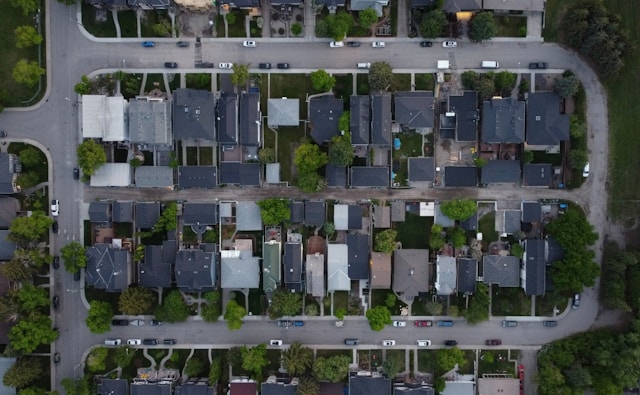
The neighborhood is as important as the home itself. Failing to research the area can lead to dissatisfaction with your new home and buyer’s remorse. Always consider the following when looking at your potential home’s neighborhood: Local Amenities including nearby schools, shopping centers, and parks. Crime Rates: Research crime statistics and speak with current residents about safety concerns.
Working with local agents who know specific markets keeps you from overpaying or missing red flags. Researching neighborhoods thoroughly means no nasty surprises about commute times or school districts after you have signed papers.
What to Research Before Buying
Important neighborhood factors to investigate include:
- School district quality (even if you do not have children, this affects resale value)
- Crime statistics and trends
- Commute times during rush hour
- Future development plans that could affect property values
- Flood zones and natural disaster risks
- Property tax rates compared to surrounding areas
Research three neighborhoods you are considering, not just the houses themselves.
Mistake #8: Trying to Time the Market Perfectly
Why Market Timing Rarely Works
The idea of holding off on a home purchase in hopes of lower mortgage rates is tempting, but any rate drop that occurs in 2026 may be modest, says Dan Wetzel, senior vice president of mortgage lending at APG Federal Credit Union. “Most forecasts do not project a dramatic drop below the mid-6% range for the new year. If rates hold steady or even slightly increase, waiting could mean higher borrowing costs.”
The Risk of Waiting for Lower Prices
“If you are holding off for a certain rate while home values go up, it may get you a higher payment, even with a lower rate. That $500,000 home early in 2026 may be $550,000 by the end of 2026. Even if rates come down by the end of 2026, your purchase price can be higher,” Schachter says.
“Another important assumption that may be incorrect is thinking that home prices are going to drop,” says Schachter. “With interest rates slowly coming down, competition will increase. And with increased competition comes higher demand. As a homebuyer, offering low-ball offers because you think the home is overpriced may leave you disappointed.”
The Better Approach
Stop trying to predict market movements and focus on finding a home that fits your actual budget and lifestyle.
Many forecasts predict mortgage rates will decrease gradually through 2026. However, this decline may be slow, and short-term rate increases are possible. If you are closing soon, locking in your rate may offer stability, but trust your instincts and risk tolerance when deciding whether to float or lock.
Mistake #9: Purchasing a Home with No Down Payment
The Hidden Costs of Zero Down
Some mortgage loans allow you to purchase a home with no down payment. While this can save you money upfront, it ends up being more costly in the long run. “You have zero equity in your home from day one. You will also have higher monthly payments because you are financing the entire purchase price. Plus, you will have to pay for private mortgage insurance, aka PMI, which protects the lender because they see you as a risky borrower.” These types of loans can also be disastrous if the value of your home decreases.
Building Equity from Day One
A down payment of at least 5% to 20% provides several advantages:
- Lower monthly payments
- Better interest rates
- No or reduced PMI requirements
- Immediate equity that protects against market downturns
- Stronger negotiating position with sellers
Mistake #10: Co-Signing with Family or Friends

The Relationship Risks
Some homebuyers who cannot afford a home on their own are co-signing on a mortgage loan with family members or friends, but experts advise against this. “Unless you are looking for a complicated way to destroy a relationship with someone you love, please do not do this. When someone like your mom or your dad co-signs your loan, they are legally responsible for that debt. Do you really want to cause chaos for your family because you bought more house than you could afford?”
Better Alternatives
Instead of co-signing, consider:
- Saving for a larger down payment
- Looking at less expensive properties
- Improving your credit score to qualify on your own
- Exploring down payment assistance programs
- Considering FHA loans with lower credit requirements
Mistake #11: Making Major Financial Changes Before Closing
What Can Derail Your Loan
All of these things can blow up your loan approval. People get impatient, buy furniture for their new house on credit, and suddenly their DTI ratio is too high. Wait until after closing for anything major.
Financial moves to avoid before closing include:
- Opening new credit cards
- Making large purchases on credit
- Changing jobs
- Moving money between accounts without documentation
- Co-signing loans for others
- Closing existing credit accounts
The Underwriting Process
While all this inspection and appraisal stuff is happening, your loan is going through underwriting. This is where actual humans at the lender review every detail of your financial life to make a final decision on your loan. Underwriters verify everything you submitted during preapproval.
Mistake #12: Ignoring the Closing Disclosure
Your Last Chance to Catch Errors
Three business days before closing, you will receive your Closing Disclosure. This is a standardized form that details every single aspect of your loan and what you will pay at closing. The Closing Disclosure is 5 pages of important information including loan terms, amount, interest rate, and monthly payment. This document is your opportunity to catch mistakes before it is too late. Compare it to the Loan Estimate you received when you first applied.
Interest rate change: Your rate should be locked, so if it is different, find out why immediately.
What to Review Carefully
Key items to verify on your Closing Disclosure:
- Loan amount and interest rate match your agreement
- Monthly payment calculations are correct
- Closing costs match the Loan Estimate (within tolerance)
- Property address and your personal information are accurate
- Prepaid items and escrow amounts are reasonable
Mistake #13: Overpaying Based on Outdated Comparables
Why Current Market Data Matters
One of the most persistent mistakes is relying on comparable sales from the 2021-2023 peak or even early 2024 data, ignoring the slowdown and regional softening evident this year. Low sales volume has rendered many comps stale and unreliable, yet some buyers, particularly in competitive or coastal markets, continue to bid aggressively, assuming perpetual appreciation. Data underscores the risk: In certain markets, investors have paid up to 35% above median sales prices for single-family homes.
Using Data Wisely
Do not overpay for “future potential” only. Do not pay too much, hoping value will come. Use the CMA plus data to back your offer.
Mistake #14: Skipping the Real Estate Agent
The Value of Professional Representation
Some buyers try to navigate the home buying process without a real estate agent, thinking it will save money. While this might be true on occasion, this is very rarely the case. A qualified agent brings valuable experience and services to the table, like: Market Expertise providing a deep understanding of the local market and helping you find the right home for the right price. Negotiation Skills to negotiate on your behalf to secure the best deal and favorable terms. Paperwork Assistance: Professional agents are equipped to handle the complex paperwork involved in buying a home to ensure everything is completed accurately.
As a first-time buyer, you do not just need access to homes: you need perspective. The right guidance helps you navigate the process effectively. Buying your first home is not just a transaction. It is a learning process, and having the right guide makes all the difference.
Finding the Right Agent
Find a local agent who specializes in your target area.
Look for agents who:
- Have experience in your target neighborhoods
- Understand your price range and needs
- Communicate promptly and clearly
- Have positive reviews from past clients
- Can explain the entire buying process
Understanding the 2026 Housing Market Outlook
Regional Variations to Consider
“While the national numbers are fairly modest, we are seeing much more variation at the regional level. In the South and West, where policies have enabled more construction, housing markets are more in balance. In the Northeast and Midwest, inventory still lags behind pre-pandemic norms, and prices have continued to rise.”
There are, of course, regional variations. House prices are falling the most along the West Coast and Sun Belt, where there remains a glut of new homes following the pandemic-era construction boom. “It should not be a surprise that supply is a key factor in areas where we see home prices decline.”
New Construction Opportunities
“The median resale home price right now is actually more expensive than the median price of a newly built home. That has only happened two or three times over the last few decades. The combination of builder incentives, including price cuts and the geography of where new construction is occurring has produced this odd situation where the typical resale home is more expensive than a newly built home.”
In addition, homebuilders are continuing to offer rate buydowns, in which they pay a sum upfront to help lower the buyer’s mortgage rate, in a bid to clear their inventory.
The Path Forward for Buyers
2026 marks a step toward “normal.” After four years of pandemic-driven extremes, including frozen migration, volatile mortgage rates, major affordability challenges, and uneven supply across regions, the U.S. housing market enters a new era. In this next phase, home sales are positioned to meaningfully grow again and affordability starts to improve as home prices level out and mortgage rates come down. Many of the unusual dynamics of the early 2020s are beginning to fade: mobility is slowly picking up, inventory is normalizing in many regions, and buyers and sellers are resetting their expectations after years of dramatic changes.
Expert Tips for Success in 2026
Preparation is Key
“Homeownership should build wealth, stability, and dignity. When buyers are rushed, under-informed, or emotionally pressured, the system fails them. The smartest buyers are not the most aggressive. They are the most prepared.” When “buyers are educated early, supported honestly, and treated with respect, homeownership becomes what it was always supposed to be: a foundation, not a gamble.”
Buying your first home in 2026 does not require perfect timing or perfect knowledge, but it does require preparation, patience, and the right support. When you understand the process and avoid common mistakes, you move from uncertainty to confidence far faster.
Financial Readiness
Doing your financial assessment and establishing your monthly budget are essential first steps.
Working with Professionals
The best strategy is to prepare adequately. Evaluate your needs, ask yourself the right questions, and most importantly, trust professionals to guide you every step of the way.
Building Your Home Buying Action Plan
Step by Step Approach
Based on expert recommendations, here is your action plan for buying a home in 2026:
Start your home search by securing that pre-approval letter. Research three neighborhoods you are considering, not just the houses themselves. Set aside an extra 5% of your budget for unexpected costs. Find a local agent who specializes in your target area. Stop trying to predict market movements and focus on finding a home that fits your actual budget and lifestyle. Your future self will thank you for taking these steps seriously.
Timeline Considerations
The typical home buying process takes 3 to 6 months from start to close. Budget adequate time for:
- Improving your credit score if needed (2 to 6 months)
- Saving for down payment and closing costs
- Getting pre-approved (1 to 2 weeks)
- Searching for homes (varies widely)
- Making an offer and negotiations (1 to 2 weeks)
- Inspection period (5 to 10 days)
- Loan processing and underwriting (30 to 45 days)
- Closing (1 day)
Your Path to Successful Homeownership
Avoiding these common mistakes can make your home buying experience smoother and more successful. By getting pre-approved for a mortgage, budgeting for additional costs, conducting thorough research, and making informed decisions, you will be well-equipped to find a home that fits your needs and ensures a positive investment.
You will learn practical strategies for avoiding market timing traps, creating realistic financial buffers for unexpected expenses, and making informed decisions that protect both your wallet and your sanity. The difference between buyers who succeed and those who struggle often comes down to recognizing these common mistakes before they happen.
The 2026 housing market offers opportunities for prepared buyers. After years of affordability challenges, the housing market is entering a new phase of improved affordability, not through a dramatic price correction, but through an extended period of flat home prices, rising incomes, and gradually falling mortgage rates. Looking ahead, incomes are expected to grow faster than home prices, easing affordability pressures.
By avoiding the common mistakes outlined in this guide and taking a strategic, informed approach to your home purchase, you can achieve your homeownership goals while protecting your financial future.