

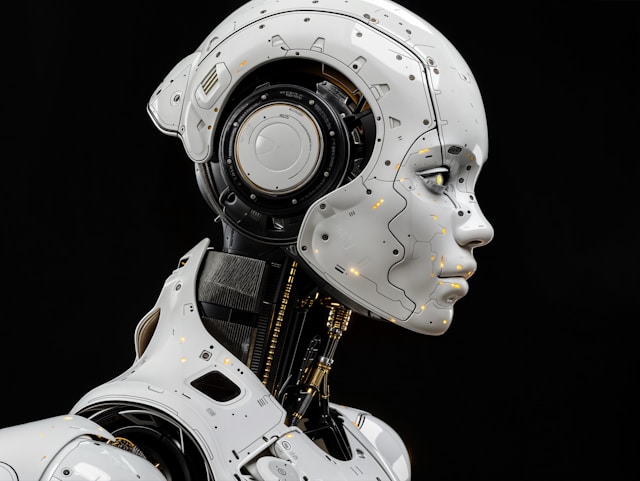
Artificial intelligence has crossed a defining threshold in 2026. No longer confined to research laboratories or the exclusive domains of technology giants, AI has woven itself into the fabric of how we live, work, heal, and connect with the world around us. Thanks to its ability to require fewer steps to solve your problems, automate tasks, and work in the background without you even knowing, AI has risen to become an important part of our daily lives and has reshaped how we do everything we do in 2026.
- The Year AI Becomes Truly Useful
- AI in Healthcare: Revolutionizing Diagnosis and Treatment
- Transforming Medical Diagnostics
- The Promise of Precision Medicine
- AI Drug Discovery and Development
- Patient Empowerment Through AI
- Addressing Healthcare Workforce Challenges
- Smart Homes: Intelligence Woven Into Living Spaces
- The Evolution of Home Automation
- Agentic AI in the Home
- The Rise of Home Robots
- Seamless Integration Across Systems
- Transportation: AI on the Move
- The Evolution of Autonomous Vehicles
- Multimodal AI for Safer Driving
- Conversational AI in Vehicles
- AI for Accessibility
- The Workplace Revolution
- AI in Scientific Discovery and Research
- Multimodal AI: The Next Frontier
- The Customer Experience Revolution
- Virtual Assistants: From Helpers to Partners
- The Economic Impact of AI
- Ethical Considerations and Challenges
- The Future of Physical AI
- The Invisible AI Revolution
- Preparing for an AI-Integrated Future
- Navigating the AI Transformation
The transformation is both profound and remarkably subtle. Since the release of OpenAI’s ChatGPT in late 2022, countless new AI products and solutions have followed, and artificial intelligence has already transformed numerous industries, government agencies, and personal aspects of modern life. What began as a technological curiosity has matured into essential infrastructure that powers everything from our morning routines to complex medical diagnoses.
After several years of experimentation, 2026 is shaping up to be the year AI evolves from instrument to partner, transforming how we work, create and solve problems. Across industries, AI is moving beyond answering questions to collaborating with people and amplifying their expertise.
This comprehensive guide explores the many ways artificial intelligence is reshaping everyday existence in 2026, from healthcare breakthroughs and smart home innovations to transportation advances and workplace transformation. Understanding these changes is essential for anyone seeking to thrive in our increasingly AI-augmented world.
The Year AI Becomes Truly Useful
From Experimentation to Real-World Application
Microsoft CEO Satya Nadella has articulated what many in the industry recognize: 2026 will be remembered as the year when AI becomes truly useful in everyday life. This shift represents a fundamental change in how we should think about artificial intelligence.
If everything goes in the right direction, 2026 could be the year when AI moves from theory to practice. Instead of just being a hot topic in tech talks and conferences, AI may finally start making a visible difference in how we work, learn, and solve problems.
The transformation extends far beyond individual productivity tools. “First, AI is shifting from individual usage to team and workflow orchestration,” explains IBM Think. That means coordinating entire workflows, connecting data across departments and moving projects from idea to completion.
The Emergence of Agentic AI
One of the most significant developments shaping 2026 is the rise of agentic AI systems. Gartner predicts that 40% of enterprise applications will leverage task-specific AI agents by 2026, compared to less than 5% in 2025. These intelligent systems represent a quantum leap beyond simple chatbots.
The single most significant shift will be the leap from simple chatbots to Agentic AI systems. This is one of the most powerful AI trends 2026. Unlike current tools that merely respond to a single prompt, Agentic AI will be capable of: Long-term goal execution: Planning, initiating, and executing multi-step tasks autonomously.
“2026 is when these patterns are going to come out of the lab and into real life,” said Blair from IBM, who leads IBM’s BeeAI and Agent Stack initiatives.
AI in Healthcare: Revolutionizing Diagnosis and Treatment
Transforming Medical Diagnostics
Perhaps nowhere is AI’s transformative potential more evident than in healthcare. AI diagnostics has fundamentally transformed medical diagnosis in 2026, bringing unprecedented levels of accuracy and efficiency.
The numbers tell a compelling story. With nearly 400 FDA-approved AI algorithms specifically for radiology, these systems process vast amounts of healthcare data with unprecedented speed and accuracy. This technology is addressing a critical challenge in medicine: Diagnostic errors affect approximately 5% of the population each year, but AI diagnostic tools are tackling this challenge through early detection and quick clinical alerts.
Providers are increasingly incorporating AI co-pilots into their systems to reduce the time they must spend documenting patient care and to help them synthesize patient details and the latest clinical research. Health systems are deploying AI to predict and prevent illness, with enormous implications for precision medicine, clinical workflow automation, and personalized care.
The Promise of Precision Medicine
AI is enabling a shift toward truly personalized healthcare. AI-supported precision medicine tailored to individual genetics, environment, and lifestyle will enable providers to predict Alzheimer’s or kidney disease, for example, years before symptoms appear. Meanwhile, targeted drugs and precision imaging that enable one-step cancer diagnosis and treatment are moving into mainstream care.
“The next measure of success is not whether AI works, but whether it can be governed, audited, and trusted to serve both patients and progress. In 2026, the measure of trust will be how clearly a system can explain itself.”
AI Drug Discovery and Development
The pharmaceutical industry is experiencing its own revolution. Agentic AI will compress the timeline for new drug development from years to months by generating new molecules and simulating how they will interact and behave in the body.
The AI biotech sector is moving past foundational models toward a “clinical era,” with multiple AI-designed drug candidates expected to reach critical clinical milestones throughout 2026.
Patient Empowerment Through AI
Patients themselves are becoming active participants in their healthcare journeys. Patients are exercising more control over their health than ever before, connecting directly with their providers through patient portals and using digital tools to track and monitor their health. By some estimates, close to half of US adults use health apps, and about a third use wearable devices that keep tabs on their health metrics.
Unlike doctors, ChatGPT has nearly unlimited time to engage in exhaustive inquiry with patients. deBronkart says he often hears stories about AI identifying symptoms that differentiate unusual or rare conditions from more common ailments.
Addressing Healthcare Workforce Challenges
AI is also helping address critical workforce shortages in healthcare. AI diagnostic tools help address workforce shortages in healthcare. With many professionals nearing retirement, automation has become essential to maintain accuracy and offset staffing challenges. According to Siemens Healthineers, 95% of lab professionals believe automation is essential for enhancing patient care, while 89% see it as critical to meeting demand amid workforce shortages.
By automating routine tasks and improving diagnostic accuracy, AI reduces the need for repeat tests, minimizes treatment delays, and optimizes resource allocation. The healthcare industry stands to save billions through AI implementation, with estimates suggesting annual savings between $200 to 360 billion.
Smart Homes: Intelligence Woven Into Living Spaces

The Evolution of Home Automation
The concept of the smart home has evolved dramatically with AI at its core. Industry experts anticipate a showcase where devices don’t just respond to commands but anticipate needs, blending seamlessly into daily life. This year’s event promises to highlight innovations that could redefine how we interact with our living spaces, from self-learning appliances to privacy-focused sensors.
From smart home systems adjusting lighting and temperature to AI-driven traffic management reducing congestion without overt user input, AI will become a natural extension of daily life.
Agentic AI in the Home
Automation without human programming represents a leap forward, where smart devices learn and adapt independently. Robot vacuums, for instance, might predict cleaning needs based on foot traffic patterns, executing tasks proactively. Digital Trends highlights “Agentic AI” as the buzzword here, describing systems that don’t wait for instructions but infer them from environmental cues, marking a departure from rule-based programming.
Companies are presenting a vision of “actionable AI” capable of making autonomous decisions and performing household tasks by coordinating with connected home appliances.
The Rise of Home Robots
2026 marks a significant advancement in household robotics. Roborock’s “Saros Rover,” unveiled at CES 2026, combines artificial intelligence and robotics to expand mobility and decision-making capabilities within the home. Combining wheels and articulated legs, the device is capable of recognizing and navigating stairs, floor gaps and slopes.
AI-powered home robots now handle routine maintenance tasks and keep your house in top shape. They can autonomously clean, perform simple repairs, and monitor systems for issues. With personal assistance features, these robots make managing your home easier and more efficient.
Seamless Integration Across Systems
Looking beyond isolated devices, CES 2026 revealed how smart homes integrate with vehicles and wearables. Autonomous cars could communicate with home systems to prepare arrivals, like warming the house or starting coffee.
In the living room, a 130-inch Micro RGB TV turns on automatically, adjusting brightness and color tones to match the time of day while displaying weather updates and major news headlines. In the kitchen, artificial intelligence analyzes the condition of ingredients stored in the refrigerator and recommends meals using items that should be consumed first. Without pressing a single button, household appliances begin preparing the day on their own.
Transportation: AI on the Move
The Evolution of Autonomous Vehicles
The automotive industry has reached a decisive inflection point. CES 2026 marked a decisive inflection point for the global automotive industry. The narrative moved beyond “software-defined vehicles” (SDVs) toward AI-defined vehicles, where competitive advantage is determined by the ability to deploy, validate, monitor, update, and monetize AI safely at scale across the full vehicle lifecycle.
CSE Ph.D. student Yiqiao (Ahren) Jin sees a similar relationship between infrastructure and self-driving vehicles. He believes AI will innovate this area in 2026.
Multimodal AI for Safer Driving
An autonomous vehicle is a multimodal system that uses camera video, laser sensors, language instructions, and other inputs to navigate city streets under changing scenarios like traffic and weather patterns. Jin says multimodal research will move beyond performance benchmarks this year.
“This shift will lead to computer systems that can reason despite uncertainty and explain their decisions. In result, engineers will redefine how they evaluate and deploy autonomous systems in safety-critical settings.”
Conversational AI in Vehicles
The in-vehicle experience is being transformed by natural language AI. Beginning next year, GM vehicles will feature conversational AI with Google Gemini, making it possible to talk to your car as naturally as you would to a fellow passenger. In the future, GM will introduce its own AI, custom-built for your vehicle. With your permission, it will be fine-tuned with your vehicle’s intelligence and your personal preferences, all connected by OnStar.
AI for Accessibility
Self-driving technology is also advancing accessibility. Known as Accessibili-D, self-driving vehicles were equipped with wheelchair accessibility and a trained safety operator. Three autonomous vehicles operated within an 11-square-mile section of Detroit, offering 110 different stops.
Autonomous vehicles use sensor data to spot cyclists sooner than human drivers.
The Workplace Revolution
AI as a Digital Colleague
AI agents are set to become digital coworkers, helping individuals and small teams punch above their weight. Chennapragada envisions a workplace where a three-person team can launch a global campaign in days, with AI handling data crunching, content generation and personalization while humans steer strategy and creativity.
AI is no longer the experiment on the side; it’s rewiring how work gets done. And it is shifting from isolated tools people can choose to adopt (or ignore) to platforms that sit at the center of workflows, decisions, and customer journeys.
Human-AI Collaboration
“The future isn’t about replacing humans,” says Microsoft’s chief product officer for AI experiences. “It’s about amplifying them.”
The workplace in 2026 will be a hybrid ecosystem where humans and AI collaborate seamlessly. Rather than replacing jobs wholesale, AI will augment human roles, transforming how teams operate. Take marketing teams as an example: AI tools will generate initial creative drafts, analyze customer sentiment in real-time, and optimize campaigns dynamically. Meanwhile, human creativity and strategic thinking remain irreplaceable.
Enhanced Productivity Tools
AI-powered project management tools are capable of predicting bottlenecks and resource needs. Intelligent HR systems are analyzing employee engagement and performance indicators. AI-powered virtual assistants are expediting ordinary communications and scheduling.
The Rise of Job Crafting
As AI reshapes the workplace, organizations must move beyond traditional change management and empower employees to actively shape their roles. Job crafting invites individuals to redesign aspects of their work, from daily tasks to relationships and even their sense of purpose. This approach is especially critical as AI automates routine functions, freeing people to focus on higher-value, creative, and strategic contributions.
By encouraging job crafting, organizations can turn potential resistance into engagement. Employees become co-creators of their future, adapting their roles to leverage AI as a tool for growth rather than a threat to job security. The most successful AI transformations are not those that simply “add humans to the loop,” but those that empower people to reimagine their work, aligning personal strengths and aspirations with organizational goals.
AI in Scientific Discovery and Research

Accelerating Breakthroughs
In 2026, AI won’t just summarize papers, answer questions and write reports; it will actively join the process of discovery in physics, chemistry and biology.
“AI will generate hypotheses, use tools and apps that control scientific experiments, and collaborate with both human and AI research colleagues,” Lee says. This shift is creating a world where every research scientist soon could have an AI lab assistant that can suggest new experiments and even run parts of them.
Major technology paradigm shifts like AI come with significant benefits and risks, and I expect AI will become ever more part of our daily lives in 2026.
AI for Climate and Sustainability
AI will play a crucial role in addressing urgent global challenges such as climate change, accurate weather forecasting, early flood warnings, and carbon footprint reduction, all of which are essential keys to sustainable development.
Microsoft has developed Aurora, an AI innovation that elevates weather and environmental forecasting, as well as a deep learning flood detection model that uses radar imagery from Earth observation satellites to penetrate clouds and work even at night. This allows researchers to accurately map at-risk and flood-affected areas, which is crucial for flood management and climate change adaptation.
Multimodal AI: The Next Frontier
Beyond Text-Based Intelligence
The release of multimodal AI models, like OpenAI’s GPT-4o, changes how AI is used. These models don’t just deal in text but also photos and videos, too, and there’s a lot of focus on finding the most value-adding, interesting ways to harness this tech.
By 2026, multimodal AI models that seamlessly understand and generate content across text, image, audio, and video will be the norm, making this a core Generative AI trends development.
“These models will be able to perceive and act in a world much more like a human. They’ll be able to bridge language, vision and action, all together,” Baughman said. “In the near future, we’re to start seeing these multimodal digital workers that can autonomously complete these different tasks to interpret things, maybe even like complex healthcare cases.”
Video Generation Advances
By 2026, major breakthroughs in underlying diffusion and transformer models will address fundamental technical hurdles. This leap means GenAI will produce long-form, high-resolution video that is virtually indistinguishable from footage captured by a professional camera, effectively democratizing cinematic quality and transforming everything from advertising and education to feature film pre-production.
The Customer Experience Revolution
AI-Powered Customer Service
Multiple artificial intelligence benefits are evident in the customer service sector. For example, in the past, if customers had queries or complaints, they had to call a company or send an email and await a response. Now, they can air their concerns with an AI chatbot and receive instant feedback, thanks to natural language processing.
Customer service operations, particularly in telecom, retail, airlines, and utilities, will adopt “agent-first service.” In many companies, the first line of support will be fully AI-driven by 2026, with humans handling exceptions or relationship-sensitive cases.
Personalized Shopping Experiences
Imagine a world in which you have a personal shopper at your disposal 24-7, an expert who can instantly recommend a gift for even the trickiest-to-buy-for friend or relative, or trawl the web to draw up a list of the best bookcases available within your tight budget. Better yet, they can analyze a kitchen appliance’s strengths and weaknesses, compare it with its seemingly identical competition, and find you the best deal. Then once you’re happy with their suggestion, they’ll take care of the purchasing and delivery details too. But this ultra-knowledgeable shopper isn’t a clued-up human at all; it’s a chatbot.
Virtual Assistants: From Helpers to Partners
Enhanced AI Assistants
Stronger Virtual Agents: As the foundations of AI tech improve, so too do its applications. AI virtual assistants are becoming increasingly useful, valuable additions to both personal and professional lives, taking care of so many tedious tasks for their users to save time and improve productivity.
Copilot is not just a tool but has become a ‘digital thought partner’ that people use in every context, from healthcare and work to relationship advice. Data from over 37.5 million conversations indicates key trends include mobile Copilot usage for health, knowledge acquisition, and seeking advice, especially during significant moments like Valentine’s Day or late at night when users discuss philosophy and religion.
Anticipatory Intelligence
Imagine waking up to an AI assistant that not only manages your calendar but anticipates your needs before you express them.
The most effective systems in 2026 will remove steps. As repetitive authentication fades, transactions complete in the background and experiences feel intuitive instead of automated.
The Economic Impact of AI
Trillion-Dollar Transformation
AI is expected to contribute trillions to the global economy while also playing a crucial role in climate change mitigation and sustainable resource management.
Global revenue for generative AI is projected to reach $30–$40 billion in 2026, a substantial increase from an estimated $18–$22 billion in 2025. Approximately 80% of global businesses plan to increase their investment in AI by 2026.
The global AI in healthcare market, valued at about USD 26.6 billion in 2024, is projected to grow to nearly USD 187 billion by 2030 at a CAGR of ~38.5%.
Productivity Gains and ROI
For every dollar invested in GenAI, early adopters have seen an average return of $3.70.
Ethical Considerations and Challenges

Balancing Innovation with Responsibility
Ethical AI Concerns and Regulations: The rapid rise in AI technology also brings with it new ethical questions that have become hot topics of debate across the globe. Agencies and authorities are currently focused on finding ways to enjoy artificial intelligence benefits in the most ethical and moral manner.
Conversations about the responsible and ethical use of AI should be prioritized across sectors and civil society. We must work collaboratively to mitigate AI’s potential harms and find inclusive ways to empower people. Our challenge is to apply AI to advance knowledge, expand understanding and benefit humanity.
Trust and Safety Requirements
He said that for AI to truly become part of daily life, we need to focus on trust and safety. This is especially important in areas like healthcare, education, and finance, where even a small mistake can cause serious harm. So, trust and safety are key.
As organizations rely on these agents to help with tasks and decision-making, building trust in them will be essential, Jakkal says; starting with security. “Every agent should have similar security protections as humans,” she says, “to ensure agents don’t turn into ‘double agents’ carrying unchecked risk.”
The Regulatory Landscape
The further AI advances, the more people will fight to steer its course, and 2026 will be another year of regulatory tug-of-war, with no end in sight.
The Future of Physical AI
Robots in the Real World
Powered by artificial intelligence, traditional robots are becoming adaptive machines that can operate in and learn from complex environments, unlocking safety and precision gains.
Unlike traditional AI systems that operate solely in digital environments, physical AI systems integrate sensory input, spatial understanding, and decision-making capabilities, enabling machines to adapt and respond to three-dimensional environments and physical dynamics. Whereas traditional robots follow set instructions, physical AI systems perceive their environment, learn from experience, and adapt their behavior based on real-time data and changing conditions.
Humanoid Robots on the Horizon
We’ve all seen the viral videos of humanoid robots with their fluid, not-quite-human-but-pretty-close movements. They’re the most compelling robotic form factor, not because they have the most efficient design, but because our world is built for human bodies. This means they can navigate existing infrastructure; doorways, staircases, factory floors, and home kitchens; without costly modifications to accommodate specialized robotic systems.
As organizations overcome these challenges, AI-enabled robots will likely transition from niche to mainstream adoption. Eventually, we’ll witness physical AI’s next evolutionary leap: the arrival of humanoid robots that can navigate human spaces with unprecedented capability.
The Invisible AI Revolution
AI That Disappears Into the Background
As AI matures, success increasingly looks like disappearance; consumers want fewer interruptions, not more dashboards or screens.
Without even realizing it, you’re utilizing AI to handle your daily actions as you search for information on the internet, use navigation tools, and more.
Artificial intelligence has reached a turning point. We’re moving past the question of whether AI works; it does. Now, we must consider where it shows up, how we apply it and if it meaningfully improves how people and systems interact in the physical world. For consumers, this presents an opportunity for everyday experiences with fewer steps and less friction.
The Recognition Economy
This shift is already visible in parking, aviation and mobility environments where access and payment no longer depend on tickets, taps or repeated authentication. These settings increasingly apply AI directly to physical infrastructure, allowing spaces to respond to people through recognition, not devices. We’re going beyond simple digitization to make the physical world truly intelligent and perceptive. This shift is increasingly described as the Recognition Economy, a framework that explains how identity and context power seamless real-world experiences at scale.
Preparing for an AI-Integrated Future
Skills for the AI Age
At minimum, everyone needs a 30% digital and AI mindset, enough fluency to use tools, ask good questions, interpret outputs, and redesign work. The leadership imperative for 2026 is clear: make change fitness a core capability, not an afterthought. Invest in broad AI literacy, redesign workflows (not just jobs), and reward learning speed and outcomes.
Build AI Skills: Become proficient in agentic AI, prompt engineering, multimodal AI, and other nascent AI technologies, as it is a great way to stay ahead of the crowd.
Embracing Human-AI Partnership
He believes 2026 will be the year AI becomes useful in real life, focusing more on helping people and businesses instead of just being a trending technology.
AI will be used to improve productivity, reduce errors, and support decision-making; acting as a helpful tool rather than a replacement for humans.
Navigating the AI Transformation
As we step into 2026, artificial intelligence is no longer just a cutting-edge technology or a buzzword. AI has transcended the realm of novelty and has become a foundational force shaping how industries operate, societies function, and daily life unfolds. From the way we work and heal to how global economies shift and media evolves, AI is weaving itself into the fabric of our reality in profound ways.
In 2026, AI will be defined by intelligence, autonomy, and seamless integration across industries, with trends like agentic AI, synthetic content, AGI, and invisible AI reshaping work, creativity, and daily life.
The companies that lead in 2026 will build intelligence into the fabric of everyday life, across digital and physical environments alike.
2026 is shaping up to be a pivotal year in AI’s journey from a fascinating technology to an indispensable societal foundation. These trends illustrate the broad and deep ways AI will influence our world, offering unprecedented opportunities alongside complex challenges. As designers, leaders, creators, and citizens, it’s our responsibility to engage thoughtfully with AI’s evolution, shaping it to reflect our values and aspirations.
The artificial intelligence transformation of everyday life is not a distant promise; it is happening now. By understanding these changes and preparing to work alongside intelligent systems, we can harness AI’s remarkable potential while maintaining the human values and connections that give our lives meaning. The future is not about technology replacing humanity; it is about technology amplifying our capabilities to create a better world for everyone.